Design Engineering

B7 versus B7M studs in H2S service against the 22 HRC hardness limit, with the factors that set sour severity

What Is NACE MR0175 and When Do You Need Sour Service Materials?

“Is this sour service?” is one of the first questions that should get asked on any wellhead or valve job — because the answer changes what materials are allowed, and getting it wrong isn’t a cosmetic mistake. It’s the difference between equipment that lasts its design life and equipment that cracks in service. What makes

What Is NACE MR0175 and When Do You Need Sour Service Materials? Read More »

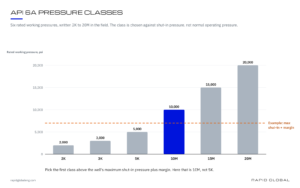
API 6A pressure classes 2,000 to 20,000 psi compared

API 6A Pressure Classes Explained: What Do 2,000–20,000 PSI Ratings Mean?

A wellhead or tree component stamped “10M” or “15,000 psi” isn’t giving you a suggestion — it’s stating, per API 6A, the exact maximum pressure that component is qualified to hold, at a specified temperature, tested to a defined procedure. Understanding what those numbers actually mean (and don’t mean) matters for anyone specifying or reviewing

API 6A Pressure Classes Explained: What Do 2,000–20,000 PSI Ratings Mean? Read More »

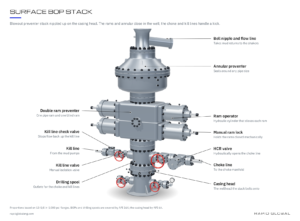
How Often Should a BOP Be Tested? API 53 Testing Intervals Explained

A blowout preventer that hasn’t been tested recently is, for well-control purposes, a blowout preventer you can’t fully trust. API RP 53 sets out how often BOP components actually need to be function- and pressure-tested — and the honest answer is “more often than most people outside drilling operations would guess.” The two kinds of

How Often Should a BOP Be Tested? API 53 Testing Intervals Explained Read More »

What Is a Christmas Tree in Oil and Gas? Surface vs. Subsea Explained

“Christmas tree” is one of those oilfield terms that confuses more people outside the industry than it should — there’s no decoration involved. It’s the stack of valves and fittings sitting on top of a well that controls everything flowing in or out of it, and the name comes simply from how the branching arrangement

What Is a Christmas Tree in Oil and Gas? Surface vs. Subsea Explained Read More »

Wellhead Equipment 101: Casing Heads, Tubing Heads, and Hangers Explained

A wellhead stack is a set of stacked pressure-containing spools and hangers, and the names of the main components — casing head, tubing head, hanger — get used constantly without always being explained. Here’s what each one actually does, and how they fit together. The basic idea: a wellhead is stacked, not built as one

Wellhead Equipment 101: Casing Heads, Tubing Heads, and Hangers Explained Read More »

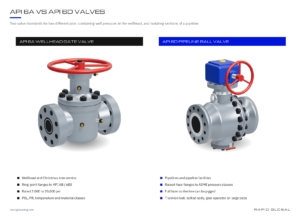
API 6A wellhead gate valve compared with API 6D trunnion ball valve

API 6A vs. API 6D: What’s the Difference Between Wellhead and Pipeline Valve Standards?

API 6A and API 6D both cover valves used in oil and gas service, and it’s a common point of confusion which one applies to a given piece of equipment. The short version: it comes down to where the valve sits. API 6A governs wellhead and tree equipment; API 6D governs pipeline valves. Same broad

API 6A vs. API 6D: What’s the Difference Between Wellhead and Pipeline Valve Standards? Read More »

Choke manifold used to circulate out a kick

Choke and Kill Manifold Design: What Actually Goes Into Sizing One

A choke and kill manifold looks like a dense cluster of valves, chokes, and pipe spools, and sizing one properly means working through several interlocking decisions at once — pressure rating, choke sizing, redundancy, and line routing — each of which constrains the others. Here’s what actually goes into that. Start with the pressure rating

Choke and Kill Manifold Design: What Actually Goes Into Sizing One Read More »

Triggers that require legacy wellhead equipment to be re-qualified

When Does Legacy Wellhead Equipment Need Design Re-Qualification?

Wellhead equipment often outlives the paperwork that qualified it. A stack installed fifteen or twenty years ago can still be structurally sound while the code edition it was designed to, the field’s production plan, or the equipment’s own service history have all moved on since. The question isn’t whether the equipment still works — it’s

When Does Legacy Wellhead Equipment Need Design Re-Qualification? Read More »

Subsea Tree vs. Surface Tree: Key Design Differences Engineers Should Know

A subsea tree does the same fundamental job as a surface tree — controlling flow from the wellbore — but almost everything about how it’s designed to do that job is different, driven by one basic constraint: nobody can walk out and manually operate it. That single difference cascades into how it’s actuated, monitored, sealed,

Subsea Tree vs. Surface Tree: Key Design Differences Engineers Should Know Read More »